Manual Therapy & Acupuncture in Harrow
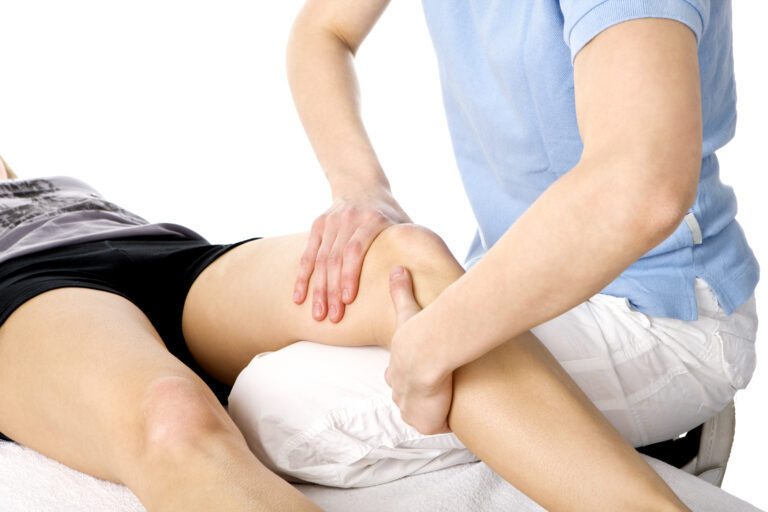
Hands-On Treatment to Support Your Recovery
Manual therapy refers to hands-on treatment techniques used to reduce pain, improve movement, and support rehabilitation. Bradley has completed advanced MSK training at University College London alongside his physiotherapy MSc and BSc (Hons) in Sport Rehabilitation — giving him a broad and evidence-informed toolkit to draw from.
Techniques include joint mobilisation and manipulation, Maitland and Mulligan approaches, myofascial release, and soft tissue massage. The technique used is always chosen based on your specific presentation — not applied as a default.
Manual therapy works best as part of a broader plan. On its own, the effects tend to be temporary — but when used alongside exercise, education, and where appropriate, injection therapy or shockwave, it can make a meaningful difference to how quickly you progress.
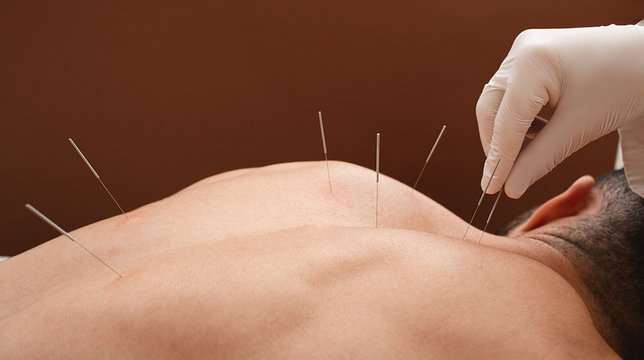
Physiotherapy-Led Acupuncture
Physiotherapy-led acupuncture uses fine needles inserted at specific points to stimulate the nervous system, reduce pain, and promote muscle relaxation. It draws on the same principles as traditional acupuncture but is applied within a clinical physiotherapy framework — always as a complement to active rehabilitation, not a replacement for it.
The needles stimulate nerves in the skin and underlying tissue, triggering the release of the body’s natural pain-relieving chemicals — including endorphins and serotonin — along the pain pathways of the spinal cord and brain. Many patients also notice an improved sense of wellbeing after treatment.
Bradley uses acupuncture for acute pain and muscle spasm, and regularly incorporates it into management plans for patients with chronic pain, fibromyalgia, and chronic fatigue syndrome — conditions where a holistic, person-centred approach makes a real difference.
Frequently Asked Questions (FAQ's)
Manual therapy is very safe when performed by a qualified practitioner. Bradley always carries out a thorough assessment before any hands-on treatment to confirm the technique is appropriate and to establish a baseline to measure progress against.
Research suggests that no single manual therapy technique is clearly superior — what matters is matching the right approach to the right patient. Bradley selects techniques based on your specific presentation, always explaining what he’s doing and why.
Manual therapy is generally comfortable. Some techniques may produce a brief moment of mild discomfort, which settles quickly. Occasionally people feel some minor soreness in the hours after a session — this is normal and will always be discussed with you beforehand.
Acupuncture is very safe. The needles used are sterile single use needles. They will only be used to treat you, and then disposed of safely and responsibly.
The needles are extremely fine — most people feel little more than a brief pinch as the needle is placed. You may notice a warm, tingling, or dull aching sensation around the needle, which is normal and generally settles quickly. If a needle is placed into a particularly tense muscle, you may feel a brief twitch — this is a good sign that the right tissue has been reached.
Needles are typically left in place for 10 to 20 minutes depending on the aim of the treatment and your response.
Book an Appointment
Manual therapy and acupuncture are available as part of your physiotherapy sessions at The Body Factory, Harrow. If you’d like to find out whether either of these approaches would help your condition, get in touch.